 Image 1 of 3
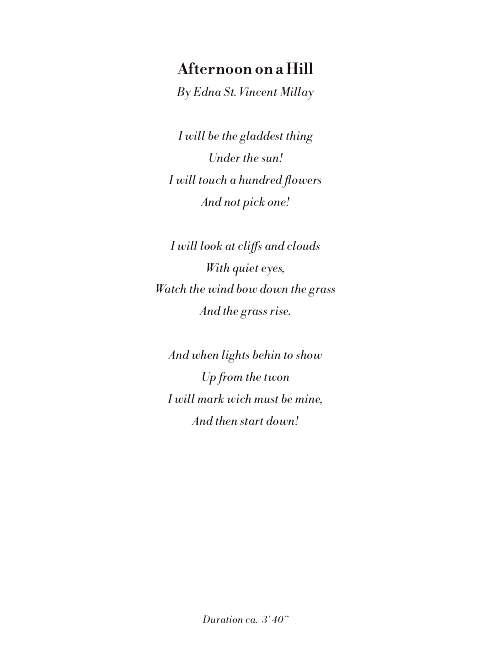 Image 2 of 3
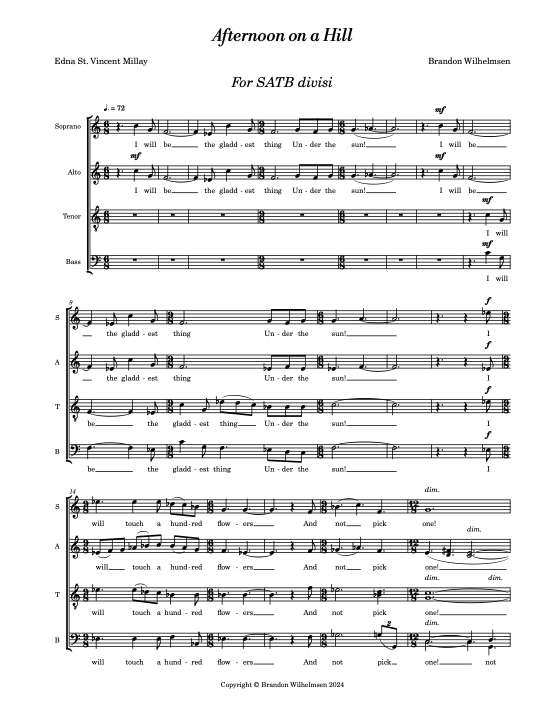 Image 3 of 3
Afternoon on a Hill, by Edna St. Vincent Millay, is a well-known and beloved text written by other composers in the choral world. Many people have experienced great satisfaction with the text she created, both in song and spoken word.
I decided, though, not to write my interpretation of the piece like other composers. Before studying the text, I focused on Edna’s journey and learned her life story. Imagine how I felt when I discovered she didn’t live a simple or pleasant lifestyle in luxury or abundance. It suddenly made me wonder why someone would write: “I will be the gladdest thing under the sun.” Her life story was filled with massive struggles and unimaginable traumas. Writing and poetry were perhaps the closest things Edna continuously worked on during her days of tragedy, hardships, and sorrow.
In my version of the text, I sought to portray a woman (possibly Edna) sitting on a large hill or mountain, surrounded by multitudes of wildflowers. She is enjoying the warm sun on her face, the wind pushing against her hair, and the smell of fresh air, grass, and fragrant flowers. She feels calm and peaceful, all while resting from the stress of life and work. As the poem continues, she starts dreaming of flying through the air, seeing different civilizations and cultures as she flies faster than a plane. Eventually, she wakes up and sees it is getting late, the sun setting, and people in the town below her turning on the lights for evening dinner. Depressed, the woman gets up and grudgingly returns to her unhappy life, wanting freedom and flight again.
Written for SATB (with Divisi), this a cappella piece is breathtaking, with rich harmonies and colors, perfect for an ensemble to show both incredible skill and mastery of teamwork and collaboration.
Here is a link to a recording of a voluntary community choir practicing this piece.